Google Docs
-
4.1
-
Developer
Google LLC
-
Category
Productivity
-
Version
Varies with device
-
Android OS
Varies with device
-
Downloads
1B
-
Content rating
Everyone
Pro
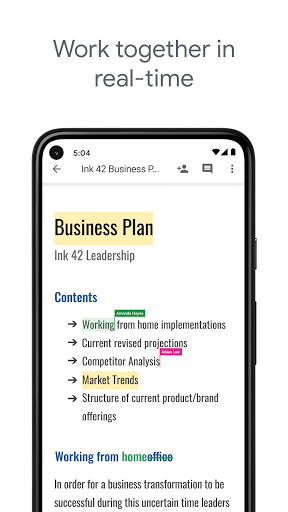
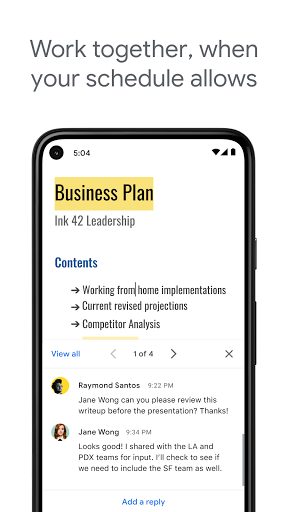
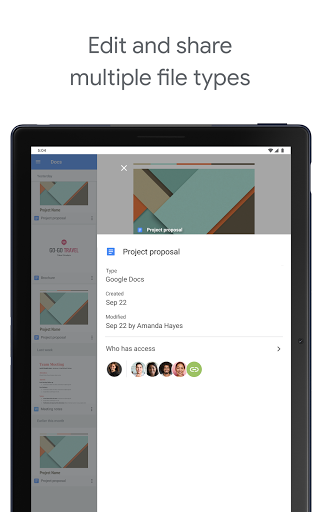
👍 1. Collaboration: One major advantage of Google Docs is its ability to facilitate real-time collaboration. Multiple users can simultaneously work on a document, making edits, adding comments, and suggesting changes. This feature is particularly useful for team projects, as it allows for seamless collaboration without the need for constant file sharing and version control.
👍 2. Accessibility: Google Docs is a cloud-based application, meaning that documents are stored online rather than locally on a computer. This enables users to access their documents from any device with an internet connection. Whether you're using a computer, tablet, or smartphone, you can easily access and edit your documents on the go.
👍 3. Automatic saving and version history: Google Docs automatically saves documents as you work, eliminating the need to manually save files. This ensures that your work is always up-to-date and reduces the risk of losing progress due to unexpected issues. Additionally, Google Docs keeps a version history of your document, allowing you to easily revert to previous versions or view changes made over time. This feature can be particularly helpful when you want to review the evolution of a document or track edits made by collaborators.
Con
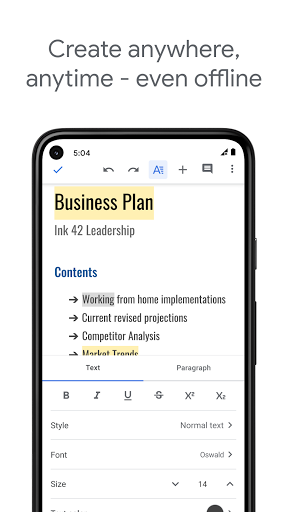
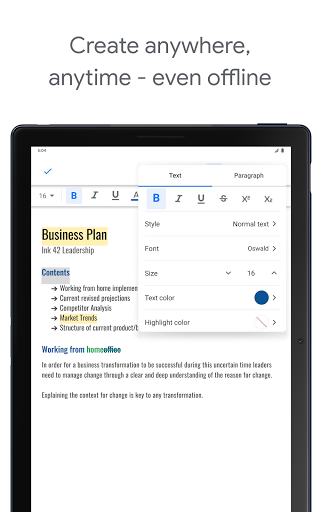
👎 1) Limited offline functionality: While Google Docs allows users to work offline, the functionality is limited compared to other document editing apps. Users can only access and edit a limited number of documents offline, and any changes made while offline will not sync until an internet connection is established.
👎 2) Limited customization options: Google Docs offers a basic set of formatting and customization options, which may be insufficient for users who require more advanced features or specific formatting requirements. Users may find it challenging to create highly customized documents or templates using Google Docs.
👎 3) Collaboration limitations: While Google Docs excels in real-time collaboration, allowing multiple users to edit a document simultaneously, it can be challenging to manage and track changes in larger document collaborations. Users may find it difficult to track individual contributions, edits, or comments, especially when multiple users are making changes simultaneously.
Ratings
Screenshots