Question.AI
-
4.5
-
Developer
D3 DIMENSION TECHNOLOGY PTE.LTD.
-
Category
Education
-
Version
1.9.9
-
Android OS
Varies with device
-
Downloads
160M
-
Content rating
0
Pros
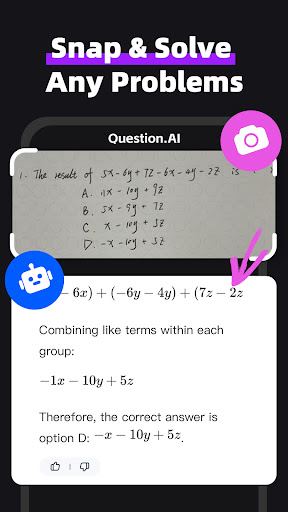
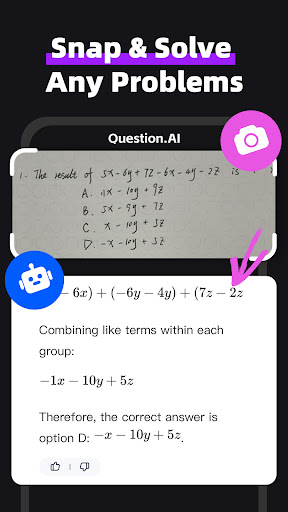
Question.AI delivers robust math assistance with step-by-step solutions, symbolic manipulation, and clear visualizations. It explains problems from basic arithmetic to calculus, including graphs and intermediate steps, making complex concepts accessible and verifiable for students and professionals, and offers hints, alternative methods, and practice problems to reinforce learning.
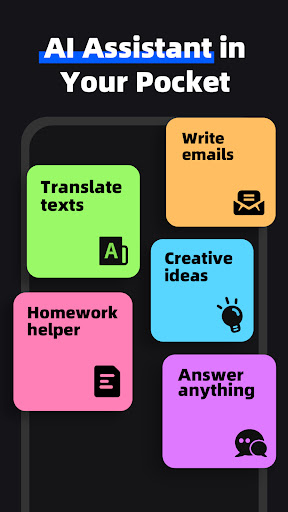
Question.AI functions as a versatile conversational assistant, understanding context and follow-up questions to deliver concise answers, summaries, and tailored recommendations. It helps draft emails, reports, and code snippets, adapts tone and complexity for different audiences, and accelerates research by synthesizing information from multiple sources while maintaining clarity and relevance.
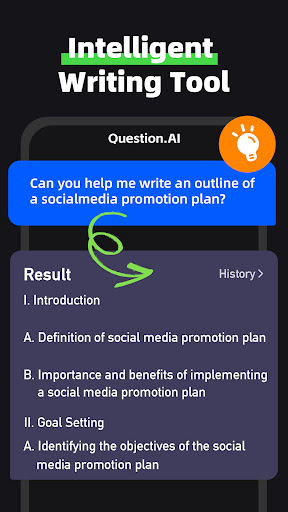
Designed for productivity and SEO, Question.AI generates clear, keyword-friendly copy, meta descriptions, and content outlines that improve readability and search visibility. With customizable prompts and export options, it streamlines workflows for marketers, educators, and creators, saving time while producing consistent, publication-ready material and includes citation support and formatting tools to meet editorial standards.
Cons
Question.AI sometimes provides incomplete or incorrect math answers, especially for advanced problems or proofs. Users should verify steps and results, which reduces efficiency and trust. Occasional hallucinations or oversimplifications can mislead learners who rely on the app for precise, step-by-step solutions.
Question.AI’s most useful features are frequently gated behind a subscription or paywall, restricting free users to basic responses and stricter usage limits. This can frustrate students and casual users on a budget, forcing upgrades for higher query caps, advanced problem-solving tools, or downloadable explanations.
Question.AI may collect conversational data to improve models, which raises privacy concerns when handling sensitive academic or personal information. Chat context can also be lost over time or across devices, requiring repeated inputs and making long-term problem tracking, collaboration, or revisiting complex solutions less convenient.
Screenshots